Air Pollution Control System Manufacturers in India | Yansons
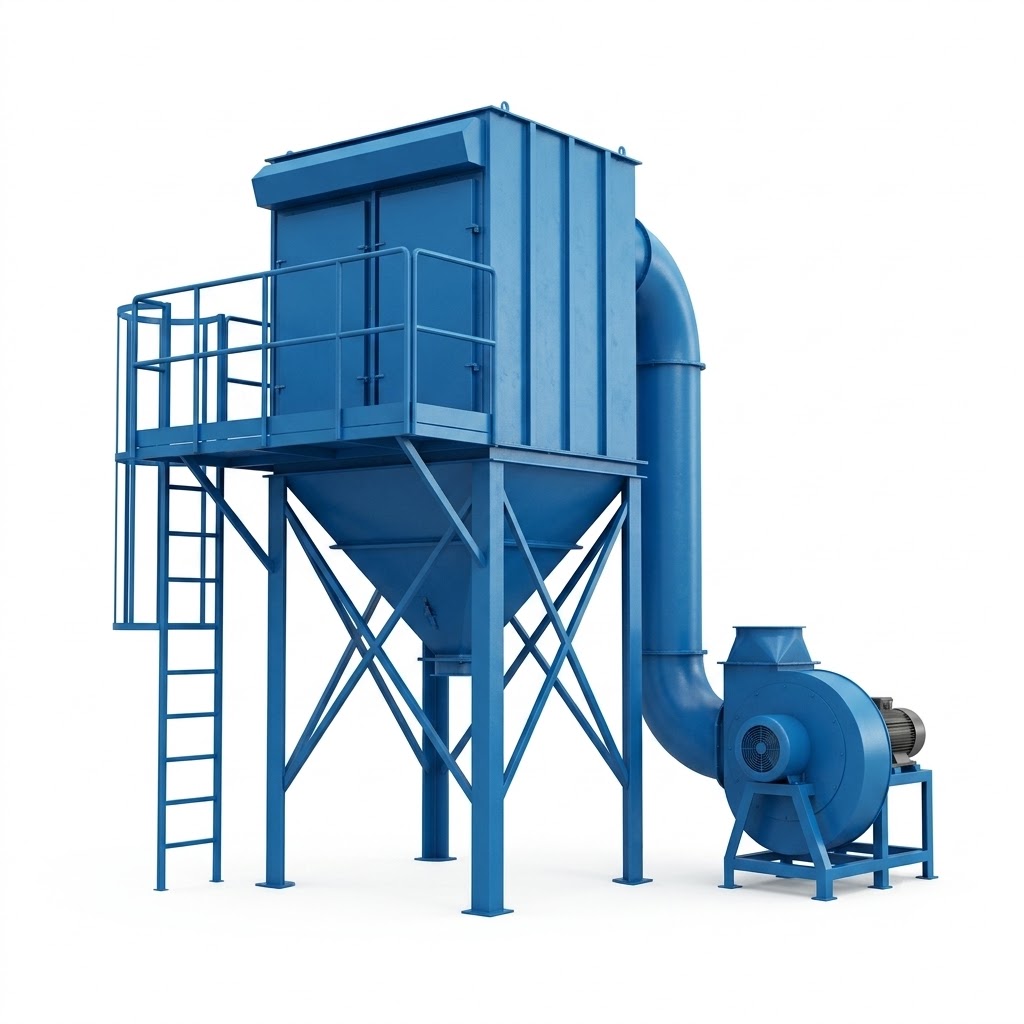


Yansons Engineering Pvt Ltd is a reliable Air Pollution Control System Manufacturers in India, Suppliers and Exporters in India, we providing industrial air pollution control solutions for manufacturing plants and process industries.
Our Industrial Air Pollution Control System is designed to manage airborne dust, particulate matter, fumes and other process-generated pollutants according to specific industrial requirements. With more than 26 years of industrial experience, we provide engineered pollution control solutions for industries where effective emission management, workplace cleanliness and environmental compliance are important.
We develop application-oriented solutions based on pollutant characteristics, airflow capacity, operating temperature, emission control requirements and plant layout to support cleaner industrial operations. As an experienced industrial engineering company, we focus on practical system design, suitable filtration technology and process-specific configurations to help industries manage airborne pollutants and improve air quality around production operations.
What Is an Industrial Air Pollution Control System?
An Industrial Air Pollution Control System is an engineered arrangement used to capture, separate, filter or treat pollutants generated during industrial processes. It can be designed to control airborne dust, particulate matter, fumes and other contaminants depending on the nature of the emission and the treatment technology selected.
What Is the Purpose of Air Pollution Control Equipment?
Properly designed Air Pollution Control Equipment helps industries manage process emissions and maintain better control over airborne contaminants.
- Captures dust and particulate matter generated during manufacturing and material handling.
- Helps control airborne pollutants at suitable extraction points.
- Supports cleaner working environments by reducing uncontrolled dust and fume release.
How Does Our Air Pollution Control System Work?
- Pollutant Generation and Capture: Dust, fumes or other airborne pollutants generated during manufacturing, processing, material handling or combustion are captured using suitable hoods, enclosures or extraction points.
- Air Movement and Conveying: An industrial fan creates the required airflow to transport pollutant-laden air through a properly designed ducting network towards the treatment equipment.
- Preliminary Separation: Depending on the application, a cyclone separator, settling arrangement or other pre-separation equipment can remove larger or heavier particles before the air reaches the main filtration stage.
- Filtration or Pollutant Treatment: The collected air passes through suitable treatment equipment. Bag filters and cartridge filters can capture particulate matter, while scrubbers or other specialized technologies may be selected for compatible gaseous pollutants and fumes.
- Collection and Disposal: Separated dust and particulate matter are collected in hoppers, bins or suitable discharge systems. Collected waste and treatment residues are handled according to their characteristics and applicable disposal requirements.
- Treated Air Discharge: The treated air is discharged through a suitable outlet or stack after the required treatment stages. Emission monitoring and recirculation arrangements, where appropriate, are selected according to the process, system design and applicable regulations.
What Are the Different Types of Air Pollution Control Equipment We Provide?
As experienced Air Pollution Control System Manufacturers in India, we develop industrial pollution control solutions according to the emission source, pollutant characteristics, production capacity and operating conditions.
- Industrial Air Pollution Control Equipment: Industrial Air Pollution Control Equipment is designed to manage airborne contaminants generated across manufacturing facilities. Depending on the application, it may incorporate dust collectors, filtration units, extraction hoods, fans and other treatment components.
- Industrial Air Pollution Control System: An Industrial Air Pollution Control System combines suitable capture, conveying, separation and treatment equipment to manage emissions from one or more industrial processes. It can be designed for individual machines, production sections or centralized plant installations.
- Industrial Dust Collection System: Industrial dust collection systems capture and separate particulate matter generated during cutting, grinding, mixing, conveying, crushing and other material-processing operations. They may use bag filters, cartridge filters or cyclone separators according to the dust characteristics and required collection performance.
- Bag Filter-Based Pollution Control System: Bag filter systems use suitable filter bags to separate particulate matter from dust-laden air or compatible process gas streams. They are commonly considered for applications involving dry dust and powder emissions, subject to temperature, chemical compatibility and operating conditions.
- Cyclone-Based Pollution Control Equipment: Cyclone separators use centrifugal action to separate relatively coarse and heavier particles from an air stream. They can operate as standalone pre-separators or as preliminary stages in a larger industrial air pollution control arrangement.
- Customized Industrial Emission Control System: Customized systems can be developed for specific process emissions by selecting suitable capture equipment, filtration arrangements and treatment technologies. Applications involving gaseous pollutants, chemical fumes or corrosive streams require technology selection based on the pollutant composition and treatment requirements.
Technical Specifications of an Industrial Air Pollution Control System
As Industrial Air Pollution Control System Suppliers in India, following values are illustrative design ranges, not confirmed standard specifications for every product. Actual capacity and configuration depend on the process and engineering assessment.
| Technical Parameter | Industrial Dust Collection System | Bag Filter System | Cartridge Filter System | Cyclone Separator |
|---|---|---|---|---|
| Airflow Capacity | Application-dependent | Application-dependent | Application-dependent | Application-dependent |
| Filtration or Separation Technology | Bag or cartridge filtration | Fabric filter media | Pleated filter media | Centrifugal separation |
| Main Pollutant | Airborne dust and particles | Dry particulate matter | Compatible fine dust | Relatively coarse particles |
| Filter Cleaning | Manual or automatic | Pulse jet or other suitable cleaning | Manual or automatic, as designed | Not applicable to cyclone body |
| Dust Collection | Hopper or collection bin | Hopper or discharge system | Bin or hopper | Hopper or collection bin |
| Installation Type | Standalone or centralized | Standalone or integrated | Machine-mounted or standalone | Standalone or pre-separator |
| System Configuration | Process-specific | Process-specific | Process-specific | Process-specific |
Advanced Features of Our Air Pollution Control System
As Air Pollution Control System Exporters in India, We develop industrial air pollution control arrangements with features selected according to process requirements and the intended treatment performance.
- Application-Specific Engineering: Each Industrial Air Pollution Control System can be planned according to pollutant type, emission rate, required airflow, operating temperature and available installation space.
- Source Capture Arrangement: Suitable hoods, enclosures and ducting connections help collect pollutants close to their point of generation, reducing uncontrolled dispersion into the surrounding work area.
- Suitable Filtration Technology: Depending on the application, the system can incorporate bag filters, cartridge filters, cyclone separators or other appropriate treatment technologies.
- Centralized or Individual Installation: Air Pollution Control Equipment can be arranged for individual machines, selected process sections or multiple emission sources connected through a common ducting network.
- Integrated System Components: Depending on the project, the system may include extraction hoods, ducting, industrial fans, filtration units, collection hoppers and suitable control arrangements.
Where Are Our Industrial Air Pollution Control Systems Applicable?
As Air Pollution Control Equipment in India, we provide industrial engineering solutions for applications where dust, particulate matter and other process emissions require effective management.
- Cement and Building Materials Industry: Pollution control equipment can help manage dust generated during material conveying, crushing, mixing, grinding and transfer operations.
- Pharmaceutical and Chemical Industries: Suitable systems can be selected for compatible powder-handling and process applications. Chemical fumes and gaseous pollutants require treatment technologies matched to their composition and hazards.
- Metal Processing and Foundries: Industrial air pollution control systems can be designed for selected dust and particulate emissions generated during grinding, casting, material handling and other metalworking operations.
- Food Processing Industry: Air filtration and dust collection arrangements can help control flour dust, powdered ingredients and other airborne particles generated during processing, mixing and packaging.
- Woodworking and Furniture Manufacturing: Suitable extraction and filtration systems can collect sawdust and fine particles produced during cutting, sanding, routing and polishing operations.
Air Pollution Control System Performance Evaluation
The performance of an Industrial Air Pollution Control System should be assessed against the actual emission source, operating conditions, treatment requirements and applicable environmental standards.
Testing Conditions
- Pollutant type, concentration and particle characteristics.
- Required airflow and emission generation rate.
- Operating temperature, humidity and gas composition.
Key Evaluation Parameters
- Airflow capacity and pollutant capture effectiveness.
- Inlet and outlet particulate concentration, where applicable.
- Filtration or treatment efficiency for the target pollutant.
- Pressure drop across filtration and treatment equipment.
Industrial Air Pollution Control System Cost
The cost of an Industrial Air Pollution Control System depends on the type of pollutant, system capacity, treatment technology and installation requirements.
- Type and concentration of pollutants.
- Selection of bag filters, cartridge filters, cyclones or other treatment technologies.
- Required filtration area and treatment efficiency.
- Material of construction and chemical compatibility.
- Number of connected machines and emission points.
- Dust collection, discharge and waste handling arrangements.
Why Choose Yansons Engineering Pvt Ltd?
- Customized Pollution Control Solutions: We develop pollution control arrangements according to actual process conditions, pollutant characteristics, airflow requirements and plant layout.
- More Than 26 Years of Industrial Experience: Our industrial experience supports the development of engineered solutions for manufacturing and material-processing applications.
- Application-Focused Engineering: Our systems can be planned around individual machines, multiple emission points or centralized industrial processes.
- Integrated Equipment Configuration: Depending on the application, a solution can incorporate extraction hoods, ducting, fans, filtration units, collection hoppers and suitable discharge arrangements.
Yansons Engineering Pvt. Ltd. is a trusted Air Pollution Control System Manufacturers in India, Suppliers and Exporters in India. Our solutions can be developed for manufacturing plants, material-processing facilities, woodworking units and other industries that require effective management of airborne pollutants. From dust collection and filtration to application-specific industrial emission control arrangements, our focus is on engineering systems according to actual operating conditions and treatment requirements. Contact us to discuss your industrial air pollution control needs and identify a suitable solution for your facility.
Frequently Asked Questions
An Industrial Air Pollution Control System is used to capture, separate, filter or treat pollutants generated during industrial operations. The system helps manage dust, particulate matter and compatible fumes or gaseous pollutants according to the selected treatment technology.
Yes. Maintenance may include inspecting and replacing filters, checking ducting and seals, examining fan performance, cleaning collection hoppers, verifying discharge mechanisms and inspecting monitoring instruments. Maintenance frequency depends on operating conditions and equipment design.
Selection depends on pollutant composition, dust concentration, particle size, airflow requirements, operating temperature, chemical compatibility, emission limits and plant layout. A process-specific engineering assessment helps determine the appropriate equipment configuration.
Yes. Suitable filtration equipment, such as bag filters or cartridge filters, can capture fine particulate matter when correctly selected and operated. Performance depends on the filter media, particle characteristics, system design and required filtration efficiency.
The cost depends on airflow capacity, pollutant type, filtration or treatment technology, equipment materials, ducting, fan power, automation, monitoring requirements and installation complexity.
Cement, metal processing, pharmaceuticals, chemicals, food processing, woodworking, plastics, power generation and general manufacturing are among the industries that may require pollution control equipment, depending on their processes and emission characteristics.
Performance can be assessed through airflow measurements, inlet and outlet pollutant concentrations, filtration efficiency, pressure drop, fan performance and compliance with applicable emission standards. Testing should follow methods appropriate to the pollutant and equipment.